
0203 601 7475

Donate
Donate
Blog Archives

Housing Report 2024–2026

Housing Report 2024–2026

Overview

During the re-housing process, we manage all logistical aspects of relocation, sourcing essential items such as beds, kitchen utensils, and furniture. By doing so, we help restore dignity to individuals and families fleeing abuse.

Where possible, we prioritise keeping our clients housed within London to reduce the risk of social isolation and disruption to support networks. However, relocation outside of London is arranged when requested or when safety considerations require it, as in the case of Sarah* and her children.

Many temporary housing properties are privately owned rather than part of the social housing system and repairs are often required. As these properties are not always directly managed by the council, Cassandra Centre takes responsibility for ensuring that necessary repairs are completed and that properties meet appropriate living standards.

We also support women with complex needs. For example, Eva* had chronic health conditions, children with disabilities, and faced a language barrier that had prevented her from accessing appropriate support. While we were able to help Eva secure a new home, we also ensured that the property was suitably adapted to meet the needs of her and her children.

Our work goes beyond securing housing, we help to transform empty spaces into homes.

In addition to housing support, we assist clients in navigating housing benefits, Universal Credit, and council tax systems. We also support families as they resettle into new communities, schools, and religious or cultural networks to promote stability and long-term wellbeing.

Key Statistics (2024–2026)

Rehousing and Relocation

  • 2 elderly individuals re-housed
  • 1 teenage mother supported to secure housing
  • 1 client transitioned from street homelessness to permanent housing

16 Families Relocated

  • Thirteen families (mothers and children fleeing violence) relocated within London.
  • Three families (mothers and children fleeing violence) relocated outside of London.

4 Single Adults Re-housed

  • Three single individuals re-housed within London.
  • One single individual re-housed outside of London.

Education Progression

  • We supported 4 women in their transition to university education, demonstrating stabilisation outcomes beyond immediate housing intervention.

Case Study Summary

Our client Anna* experienced street homelessness. While the Centre was operational, she relied on StreetLink referrals and volunteer-led emergency accommodation. On one occasion, she was placed in a private residence where she felt unsafe and uncomfortable.

As she approached the age cut-off for certain services, she was moved into hostel accommodation. However, safeguarding concerns required an urgent relocation. Our Independent Domestic Violence Advisor (IDVA) persistently advocated on her behalf, resulting in her being granted temporary accommodation, which was later converted into permanent housing.

Complex Needs and Advocacy

A significant proportion of clients presented with intersecting vulnerabilities, including:

  • Chronic health conditions
  • Children with disabilities
  • Language barriers
  • Safeguarding risks in shared accommodation
  • Street homelessness
  • Age-related service cut-offs

In cases involving privately owned temporary accommodation, Cassandra Centre frequently intervened to:

  • Escalate and secure property repairs
  • Liaise with landlords and managing agents
  • Advocate with local authorities where council oversight was limited

Privately leased temporary accommodation is often significantly more expensive than council-owned housing, creating additional financial strain on the public system and increasing housing instability risks.

Types of Housing Accessed

Temporary Accommodation (Private Landlords)

These properties are privately owned and may be managed by either the local council or an external organisation. When leased from private landlords, costs are often significantly higher than social housing rates.

Council-Owned Temporary Accommodation

These properties are owned and managed by the local authority, which is responsible for property management and council tax arrangements.

Systems Impact

Our work extends beyond securing accommodation. We mitigate systemic barriers that prevent survivors from sustaining tenancies, including:

  • Inaccessible benefits systems
  • Language barriers
  • Lack of disability adaptations
  • Poorly maintained temporary housing
  • Fragmented safeguarding responses

By providing holistic housing stabilisation support, Cassandra Centre reduces the likelihood of:

  • Repeat homelessness
  • Return to abusive environments
  • Educational disruption for children
  • Increased demand on emergency services

Summary Impact (2024–2026)

  • 20+ individuals and families directly re-housed
  • 16 families protected from domestic abuse through relocation
  • 1 street homeless client transitioned to permanent housing
  • 4 women progressed into higher education
  • Multiple properties repaired or adapted to meet health and safeguarding standards

*All names have been changed to protect anonymity.

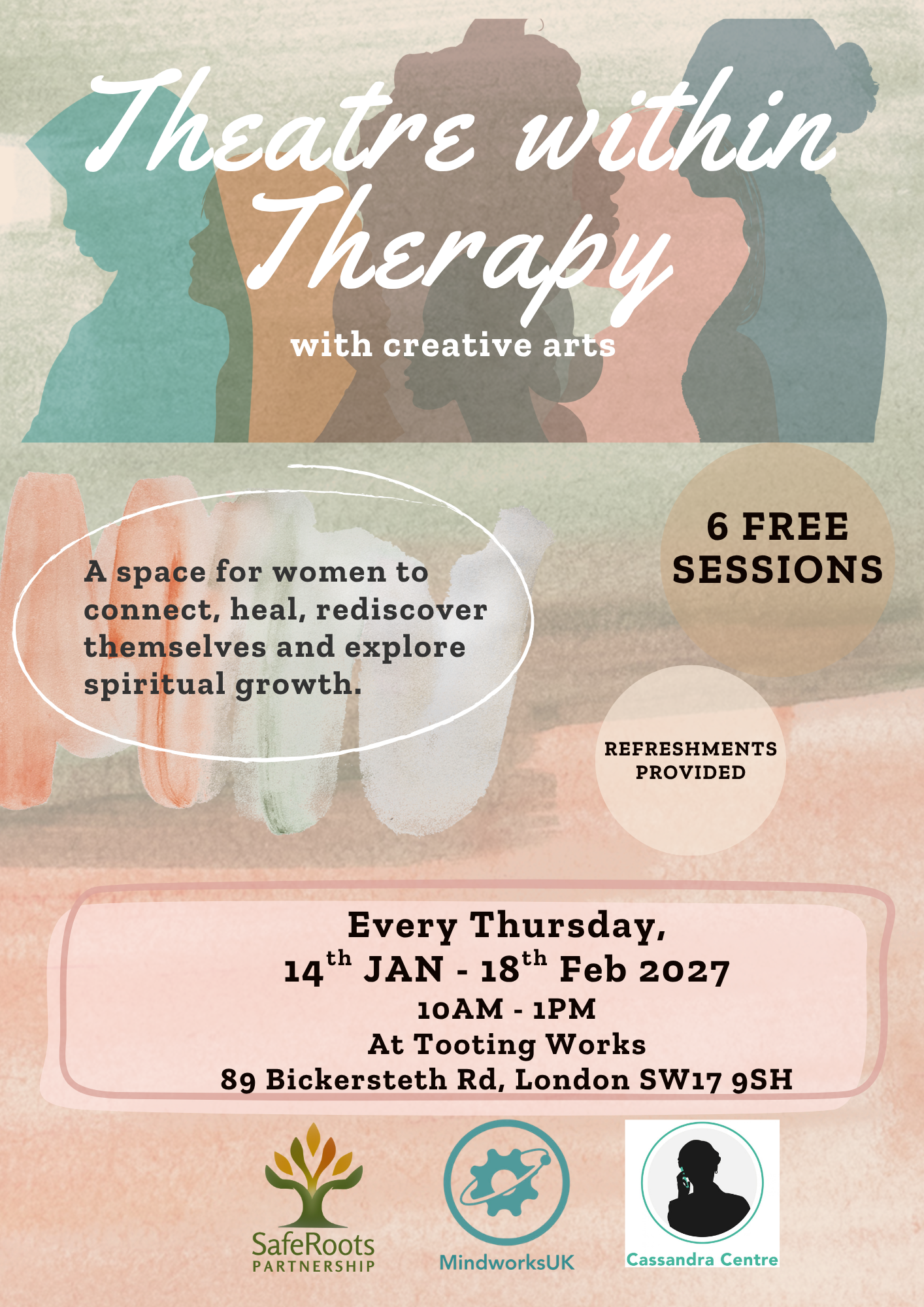
Theatre Within Therapy

Theatre Within Therapy

With Creative Arts

A space for women to connect, heal, rediscover themselves and explore spiritual growth.

6 Free Sessions

Refreshments Provided

Session Dates and Times

Every Thursday

Dates: 14th January – 18th February 2027

Time: 10:00am – 1:00pm

Location

Tooting Works
89 Bickersteth Road
London
SW17 9SH

About the Sessions

Theatre Within Therapy with Creative Arts offers a welcoming space for women to connect, heal, rediscover themselves and explore spiritual growth through creative expression.

Join us for six free sessions, with refreshments provided.

Organisations Involved

  • SafeRoots Partnership
  • MindworksUK
  • Cassandra Centre

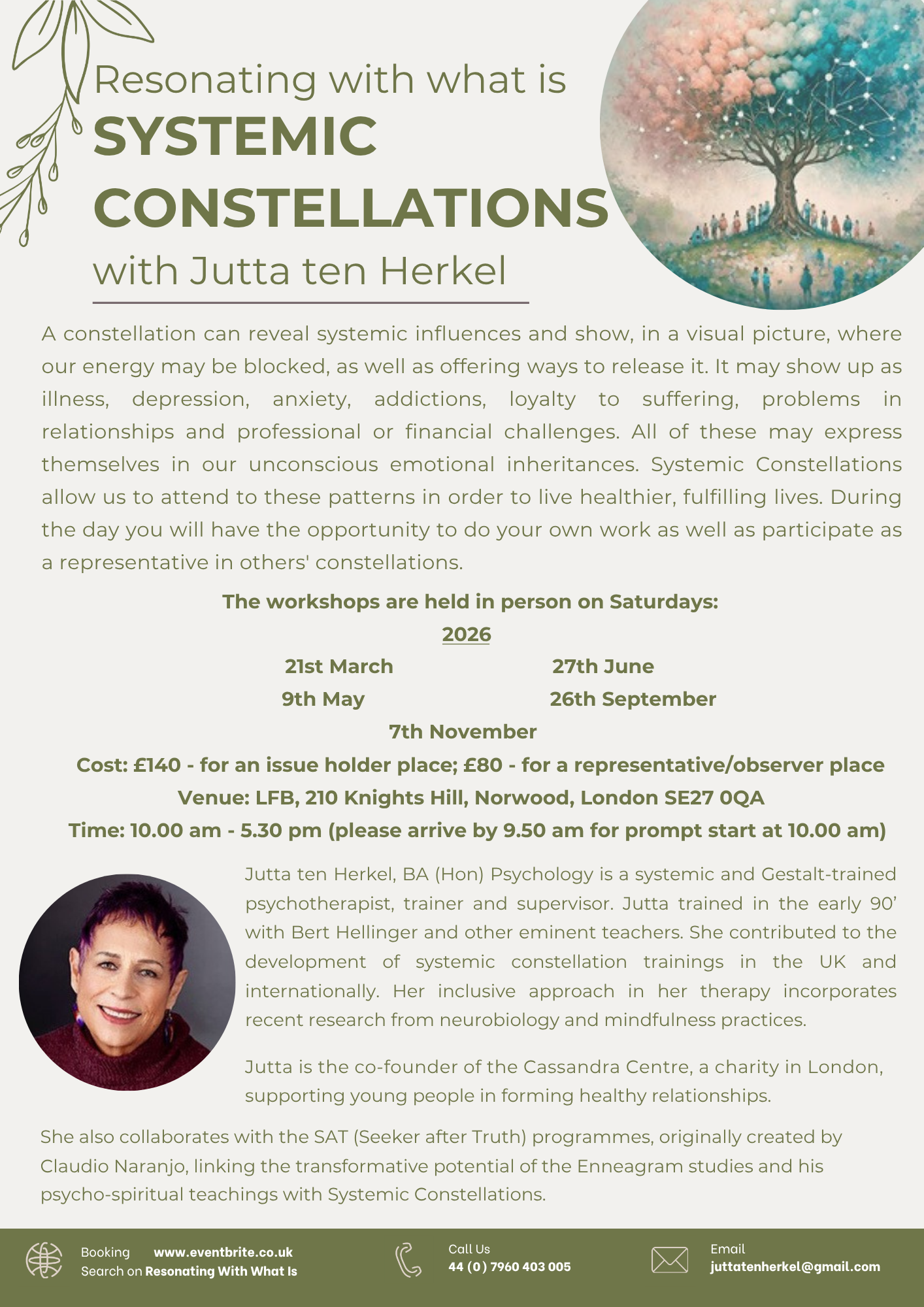
Resonating with what is SYSTEMIC CONSTELLATIONS: With Jutta ten Herkel

Resonating with what is SYSTEMIC CONSTELLATIONS

With Jutta ten Herkel

A constellation can reveal systemic influences and show, in a visual picture, where our energy may be blocked, as well as offering ways to release it. It may show up as illness, depression, anxiety, addictions, loyalty to suffering, problems in relationships and professional or financial challenges. All of these may express themselves in our unconscious emotional inheritances. Systemic Constellations allow us to attend to these patterns in order to live healthier, fulfilling lives. During the day you will have the opportunity to do your own work as well as participate as a representative in others’ constellations.


The workshops are held in person on Saturdays:

2026

  • 21st March
  • 9th May
  • 27th June
  • 26th September
  • 7th November

Cost: £140 – for an issue holder place; £80 – for a representative/observer place

Venue: LFB, 210 Knights Hill, Norwood, London SE27 0QA

Time: 10.00 am – 5.30 pm (please arrive by 9.50 am for prompt start at 10.00 am)

About Jutta ten Herkel

Jutta ten Herkel, BA (Hon) Psychology is a systemic and Gestalt-trained psychotherapist, trainer and supervisor. Jutta trained in the early 90’s with Bert Hellinger and other eminent teachers. She contributed to the development of systemic constellation trainings in the UK and internationally. Her inclusive approach in her therapy incorporates recent research from neurobiology and mindfulness practices.

Jutta is the co-founder of the Cassandra Centre, a charity in London, supporting young people in forming healthy relationships.

She also collaborates with the SAT (Seeker after Truth) programmes, originally created by Claudio Naranjo, linking the transformative potential of the Enneagram studies and his psycho-spiritual teachings with Systemic Constellations.

Booking and Contact Information

Booking: https://www.eventbrite.co.uk/o/jutta-ten-herkel-15957743712
Search for Resonating With What Is

Call Us: +44 (0) 7960 403 005

Email: juttatenherkel@gmail.com

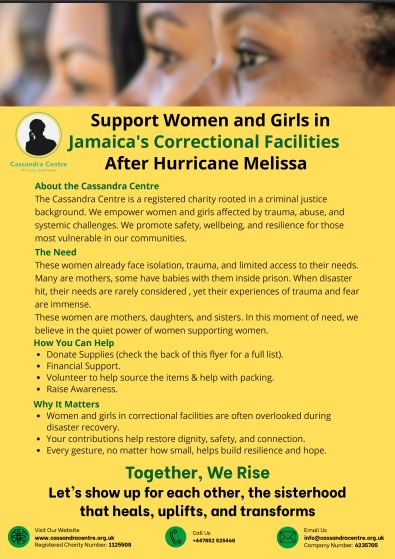
Support Women and Girls in Jamaica’s Correctional Facilities After Hurricane Melissa

Support Women and Girls in Jamaica’s Correctional Facilities After Hurricane Melissa

About the Cassandra Centre

The Cassandra Centre is a registered charity rooted in a criminal justice background. We empower women and girls affected by trauma, abuse, and systemic challenges. We promote safety, wellbeing, and resilience for those most vulnerable in our communities.

The Need

These women already face isolation, trauma, and limited access to their needs. Many are mothers, some have babies with them inside prison. When disaster hits, their needs are rarely considered, yet their experiences of trauma and fear are immense.

These women are mothers, daughters, and sisters. In this moment of need, we believe in the quiet power of women supporting women.

How You Can Help

  • Donate Supplies – Help provide essential items to women and girls in need.
  • Financial Support – Make a financial contribution to support the appeal.
  • Volunteer – Help source the items and assist with packing.
  • Raise Awareness – Share the appeal and help us reach more people.

Why It Matters

  • Women and girls in correctional facilities are often overlooked during disaster recovery.
  • Your contributions help restore dignity, safety, and connection.
  • Every gesture, no matter how small, helps build resilience and hope.

Together, We Rise

Let’s show up for each other, the sisterhood that heals, uplifts, and transforms.

Support the Appeal

To donate, volunteer, provide supplies or find out more about how you can support women and girls in Jamaica’s correctional facilities, please contact the Cassandra Centre.

Website: www.cassandra-centre.org.uk
Telephone: +44 7862 520468
Email: info@cassandracentre.org.uk

Registered Charity Number: 1129508   |   Company Number: 6235706

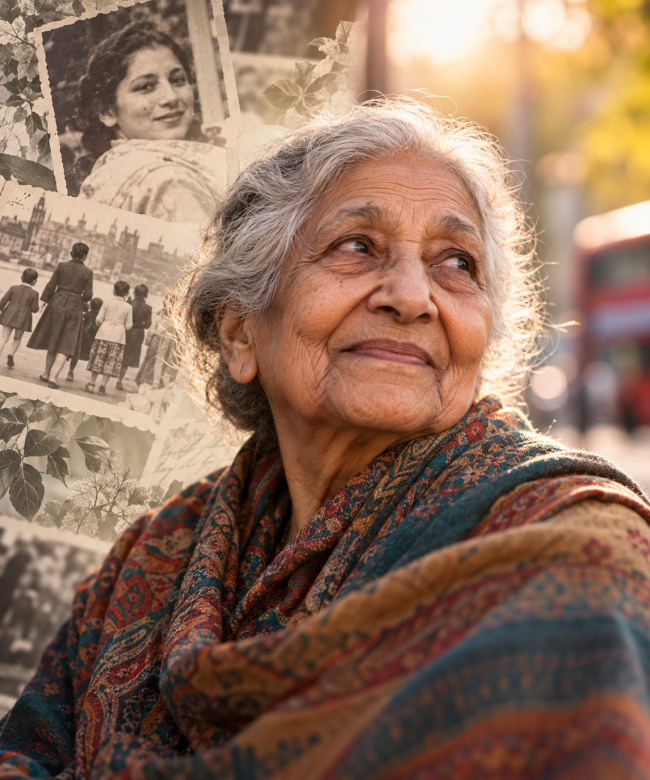
Every Wrinkle Tells a Story

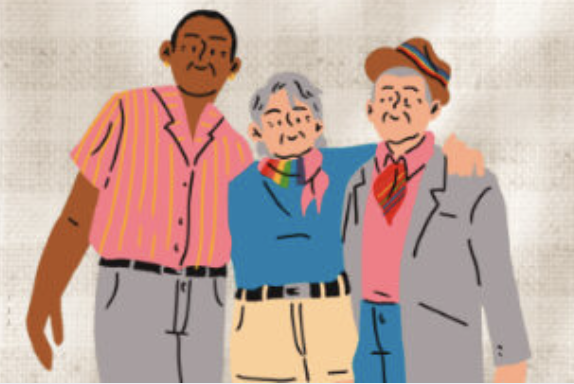
When we look at an older person, what do we see?

An elder waiting at a bus stop. A grandmother attending a community group. A neighbour tending a garden. Too often, society sees age before it sees the person.

Every older person has lived a lifetime of experiences that have shaped who they are today. Behind every face lies a story of hopes, achievements, challenges, and relationships. Many have also endured hardships that remain largely unseen.

At Cassandra Centre, the elders we support have lived through extraordinary periods of social change and adversity. Some have experienced war, endured displacements such as, migration, poverty, discrimination, and/or family separation. Others have faced domestic abuse, bereavement, illnesses and profound loss. While many may have spent years caring for others, their own emotional wounds often remained unspoken.

Trauma does not always fade with time. For some older people, painful experiences continue to affect their wellbeing long after the events themselves have passed. Feelings of grief, anxiety, fear or loss may remain, influencing not only their own lives, but sometimes those of future generations.

This is often referred to as intergenerational trauma. The effects of violence, poverty, racism, displacement, and other forms of adversity can shape family relationships, coping strategies, and patterns of behaviour across generations.

Alongside these challenges, many older people experience a growing sense of isolation and loneliness. In a society that frequently prioritises youth and independence; some elders often feel overlooked or disconnected. While many enjoy strong support networks, others may encounter days without meaningful social contact. Loneliness is about more than being alone. It is the feeling of no longer being seen, heard, or connected to others.

At Cassandra Centre, we believe every older person deserves dignity, respect, and a sense of belonging. Supporting our elders means that we are recognising the whole person, including their experiences, strengths, and contributions, rather than defining them by age alone.

Our Approach

Our approach is rooted in community. For generations, elders were valued as sources of wisdom, knowledge and experience. Strong communities ensured that people remained connected and supported throughout their lives.

Through our programmes and activities, we create opportunities for older people to build friendships, share experiences, learn new skills, and strengthen connections across generations. Just as importantly, we create spaces where people feel welcomed, valued, and included.

Often, the most meaningful support comes through simple acts: a conversation, a shared meal, a phone call, a community outing, or a moment of laughter. Small acts of connection can make a profound difference to someone who feels isolated.

Our elders carry stories of pain, resilience, courage, love, and perseverance. By listening to those stories and valuing the people who hold them, we strengthen not only individual lives but our communities.

No one should have to face the weight of life’s challenges alone. Together, through compassion, connection and community, we can ensure that older people remain valued, supported, and included.

At Cassandra Centre, we proudly stand alongside our elders, helping to build the sense of belonging that everyone deserves.

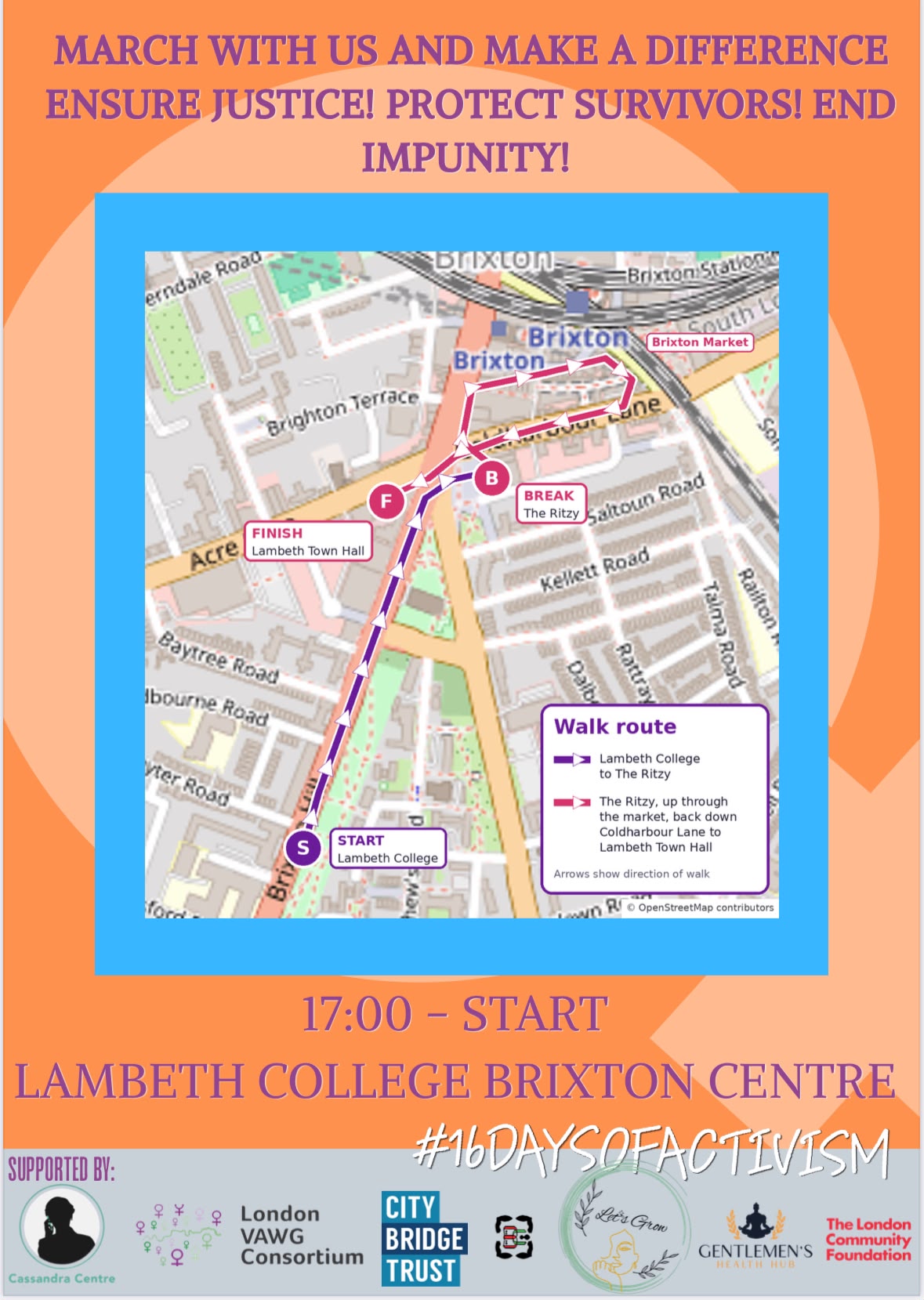
Join us in Brixton on 27 November. Stand with us. Walk with us. Be part of the change.

This year marks 25 years since Cassandra’s death. As we honour her memory, we also remember all women and girls whose lives have been lost to gender-based violence.

On 27 November, as part of the 16 Days of Activism Against Gender-Based Violence, Cassandra Centre will host an awareness walk in Brixton. This event is not only a commemoration but a call for collective action.

We will honour those whose lives have been taken, stand in solidarity with survivors, and challenge the attitudes, behaviours, and inequalities that allow violence to persist in our communities.

We are making a special appeal to men and boys to join us. Ending gender-based violence is everyone’s responsibility. Men and boys have a crucial role in promoting respect, challenging harmful behaviours, and helping to create safer communities for women and girls.

By coming together, we send a powerful message that violence against women and girls will not be tolerated and that lasting change requires all of us.

Together, we can help build a future where women and girls can live free from fear, abuse and violence.

Join us in Brixton on 27 November. Stand with us. Walk with us. Be part of the change.

Domestic abuse centre opened in Norbury in memory of Cassandra McDermott who was murdered by her ex-boyfriend. – Swindon Advertiser, 2015

A charity set up in memory of a teenager killed by her ex- boyfriend has opened a centre in the town where she was killed.

The Cassandra Centre (CC), (formerly known as Cassandra Learning Centre) was opened in London Road, Norbury, 13 years after Cassandra McDermott, 19, was attacked at her mother’s house by Mario Celaire on October 25, 2001.

Celaire was found not guilty of her murder following a trial in 2002 but after new evidence came to light, he was the first person to be retried after the Double Jeopardy rules were abolished.

He pleaded guilty to the manslaughter of Cassandra at the Old Bailey on May 22, 2009.

Since Cassandra’s death the family has dedicated themselves to helping victims of domestic abuse, and CC worked with 200 people last year.

Cassandra Centre Chief Executive, Jennifer McDermott said: “Our family suffered a tragedy and, through our work at CC, I want to show that this will ultimately benefit others. We will work to provide support to those in difficulty and teach young people the value of independence. I can think of no better way to honour my daughter’s memory.”

The centre aims to teach 13 to 25-year-olds life skills, and to build the strength needed to walk away from unhealthy relationships.

Founder of Croydon domestic abuse charity devastated after losing £10k after third burglary in under a year. – My London News, July 2021

A domestic abuse charity in Norbury, Croydon has sadly been hit with yet another burglary, which totals up as the third break-in to occur at the premises in under a year.

The latest break-in which The Cassandra Centre was unfortunately the victim of happened on the evening of Thursday, 24 June.

The charity’s founder, Jennifer McDermott, was horrified to discover the following morning that the centre was vandalised and brand-new laptops, which were all donated to the charity, were nowhere to be found.

The Cassandra Centre is a safe space for nearby victims of domestic violence, but the series of burglaries has left Ms McDermott utterly devastated and terrified that the culprit may return again.

The front door into the building remains boarded up and various rooms inside remain in a ransacked state as it’s been difficult for Ms McDermott to tidy away.

The CCTV footage from last month shows a man with a mask on with gloves to disguise his identity. He is also wearing a cap and has a backpack on his shoulder.

Ms McDermott told My London: ” We work so hard. We’re constantly helping and doing something because the need is so huge. So when our equipment is stolen it really is disastrous – it slows us down.

“What’s happened is horrendous, it’s so intrusive. This is not a home, but these are our offices where we spend a lot of time.

“We spend a lot of energy with our women who talk about very serious things. They themselves have been violated in their relationships, but it’s even more so a violation of privacy that this is happening.

“I feel violated by the whole thing because how dare you come into our space and violate us.”

The two previous burglaries happened within a week of each other last summer, where the thief stole extensive CCTV equipment from the centre.

The disastrous consequences of being a victim of three burglaries means Ms McDermott has been set back some £10,000, as she tries to pay for the damages out of her own pocket.

Ms McDermott is ‘really confident’ that it is the same culprit responsible for all three incidents, as so much time has passed since last summer’s two burglaries, she believes he would have known what devices have been replaced.

Meanwhile, the police’s slow response to send an officer down and pick up the CCTV footage from last month left Ms McDermott extremely disappointed at the lack of support from the force.

Ms McDermott said: ” I am so annoyed with the police, I know that the police takes no interest in burglary. But come on now, this is a centre where we work with women – sometimes we’re here late at night.

“They (police) told me they haven’t got any footage from the main road. They will find some excuse because time has passed.

“I’ve got the CCTV footage and have told the police. They told us they have a named officer but up until now that named officer hasn’t made contact with us, which I’m annoyed about.”

In 2001, Ms McDermott lost her 19-year-old daughter, Cassandra after an ex-boyfriend brutally attacked and killed the teenager in her own home.

The Cassandra Centre was established ten years later in Cassandra’s name, who would be 40 years old were she alive today.

Ms McDermott adds: ” Each time we have a burglary it triggers me, because it was somebody who killed her. I do this in memory of her, but this person is in our space.

“I am sure our women would feel really horrible knowing this is happening. When they come to see the front door boarded up, it questions what is a safe space.

“We’re not a publicly funded service, we have to beg for people donate to us. That’s how we survive. So this just kills me.”

The centre has been a beacon of hope and support for women and men who suffer from domestic abuse, and calls for help come from as far as Wales.

Superintendent Andy Brittain, from the local policing team in south London, said: “I understand that offences such as burglary cause incredible distress and concern for victims and I acknowledge that our initial response to these reports was not sufficient.

“Officers are in the process of collecting CCTV from the premises and are reviewing whether there are any other evidential opportunities. We have offered the occupier crime prevention advice and would welcome the opportunity to meet with them to discuss their experience and to reassure them that we are committed to bringing offenders to justice.”

Shortly after My London approached the Met for comment, officers turned up at the centre to collect CCTV footage of the burglary, but Ms McDermott says the damage has already been done.

Go Fund Me, July 2021

Fundraiser by Yasmine Hamilton: Support for Cassandra centre

HI, I am survivor from domestic abuse and was referred to the Cassandra Centre for help by another DV charity in the borough and Jennifer the CEO of the Cassandra Centre recommend I do therapy which they funded, this support was to help me express my trauma.

This charity has helped me so much from funding and installing security cameras for my property to ensure me and children felt safe, helping me move from a one bedroom property to a two bedroom, attending court and supporting me with a serious case. I have been involved with the Cassandra Centre for 3 years now and have begun to volunteer there as I would like to be involved with helping others who have experienced this type of trauma.

I’ve started this page because the Cassandra Centre has been broken into multiple times this year and electrical items and various other things have been stolen.

I would like to give back to the community so that Cassandra Centre can continue supporting other domestic abuse victims.

Donate here at Yasmine’s Go Fund Me page

Windowless rooms and insect infestations: Domestic abuse victims forced to live in ‘traumatising’ properties

A Sky News report

We just lay on (the) bed and sleep. That’s it. That’s all we can do. I’ve asked the council several times, but they say I’m not high risk,” one woman tells Sky News.

Victims of domestic violence are being forced to live in “traumatising” accommodation that may not even have a working kitchen or toilet, Sky News has found.
Our investigation has documented the state of social accommodation given to tens of thousands of survivors across the UK.

Testimonies have been gathered from women and children who have been housed in properties that have no windows, no furniture, insect infestations, broken kitchens and faulty toilets. And we’ve collected evidence showing that some local authorities are breaking the law and not meeting the needs of some of the country’s most vulnerable.

Lawyer Izzy Mulholland, from the Public Service Law Centre, told Sky News: “I’m frustrated and angry almost daily because I’m having to defend people who shouldn’t need defending.

“And the most frustrating thing – and it seems ridiculous – is that we win. And that means that a local authority accepts that they’re acting unlawfully. And we don’t just win some of the times, we win almost all of the time.
“And that is so frustrating because it means that if a lawyer gets involved, they will deliver the service that they always should deliver. My job shouldn’t be necessary.”
Only one in three abuse victims is accepted into refuges because most are full or have closed due to government cuts.

If they can’t get into a sanctuary, the victims are placed into so-called temporary accommodation by their local authority.

And there are now more women needing help than ever before, according to the UK’s largest abuse charity, Refuge. Last year saw a 22% rise in people being supported by the National Domestic Abuse Helpline. All mainstream political parties agree something needs to be done.

We were invited to meet a mother who has been housed in B&B accommodation in London. The law says that vulnerable people should not stay in this type of property for more than six weeks.
But the family we spoke to had lived there for more than two years. “Ayesha” and her three children live their lives in a small, windowless room with no table and chairs, a broken cooker, broken shower and an ant infestation.
She told us: “When I first arrived, I thought I would receive some support. I was told I would only be here for a while before we got a new home, but we’re still here. They’re not supporting me or my children. We can’t do anything in here.

“We just lay on (the) bed and sleep. That’s it. That’s all we can do. I’ve asked the council several times, but they say I’m not high risk.”

She added: “Sometimes I feel like I’m living on the streets because I don’t have a house. It’s like I’m homeless. I feel like I’m in jail. I don’t even know when it’s sunny or raining outside.

“I never thought that life would be like this. That my children would suffer like this. I will bear all the sufferings in the world, but I cannot bear to see my children suffer.”

Sky News is not identifying the local authority responsible for this family in order to protect the family’s identity, but after being presented with our evidence the council says it will arrange an urgent inspection of the property and will help them find “suitable accommodation”.

The government has pledged £125m for emergency accommodation for domestic abuse victims this year, but charities who help survivors say that’s not nearly enough.
Labour MP Jess Phillips has campaigned on this issue for years and says women and children are being housed in “dangerous and unsavoury accommodation that is not fit for human habitation”.

She told Sky News: “Women expect to come forward and be provided with reasonable services, and it’s a big, huge thing to break free of such exploitation.
“And what they find is exactly what their perpetrator promised them. They find a system that doesn’t believe them, that treats them like animals, that places them in dangerous situations, and a huge amount of them will describe it as going from one hell to another.”
“People often say to me and I hear this again and again: ‘I can get over the things that happened to me, the trauma that happened to me. I can’t get over is how traumatising the process was for me and my family.’”

All mainstream political parties agree that the situation for domestic abuse victims needs to improve.
We asked the government for an interview with a minister about the findings of our investigation. They said no one was available but gave this statement by Eddie Hughes, the minister for rough sleeping and housing: “It is absolutely vital that victims of domestic abuse and their children across the country can access practical and emotional support to help them rebuild their lives in a safe environment.

“Since April 2021 we have provided £250m to councils across England to make sure safe accommodation spaces, such as refuges, can provide victims with vital support services including counselling and therapy, children support and advocacy support to access healthcare, social workers and benefits.”

Privacy Settings
We use cookies to enhance your experience while using our website. If you are using our Services via a browser you can restrict, block or remove cookies through your web browser settings. We also use content and scripts from third parties that may use tracking technologies. You can selectively provide your consent below to allow such third party embeds. For complete information about the cookies we use, data we collect and how we process them, please check our Privacy Policy
Youtube
Consent to display content from - Youtube
Vimeo
Consent to display content from - Vimeo
Google Maps
Consent to display content from - Google